One-Star Kato: First Impressions of Chef Jon Yao’s Elevated Taiwanese Cuisine
MICHELINIMPRESSIONS

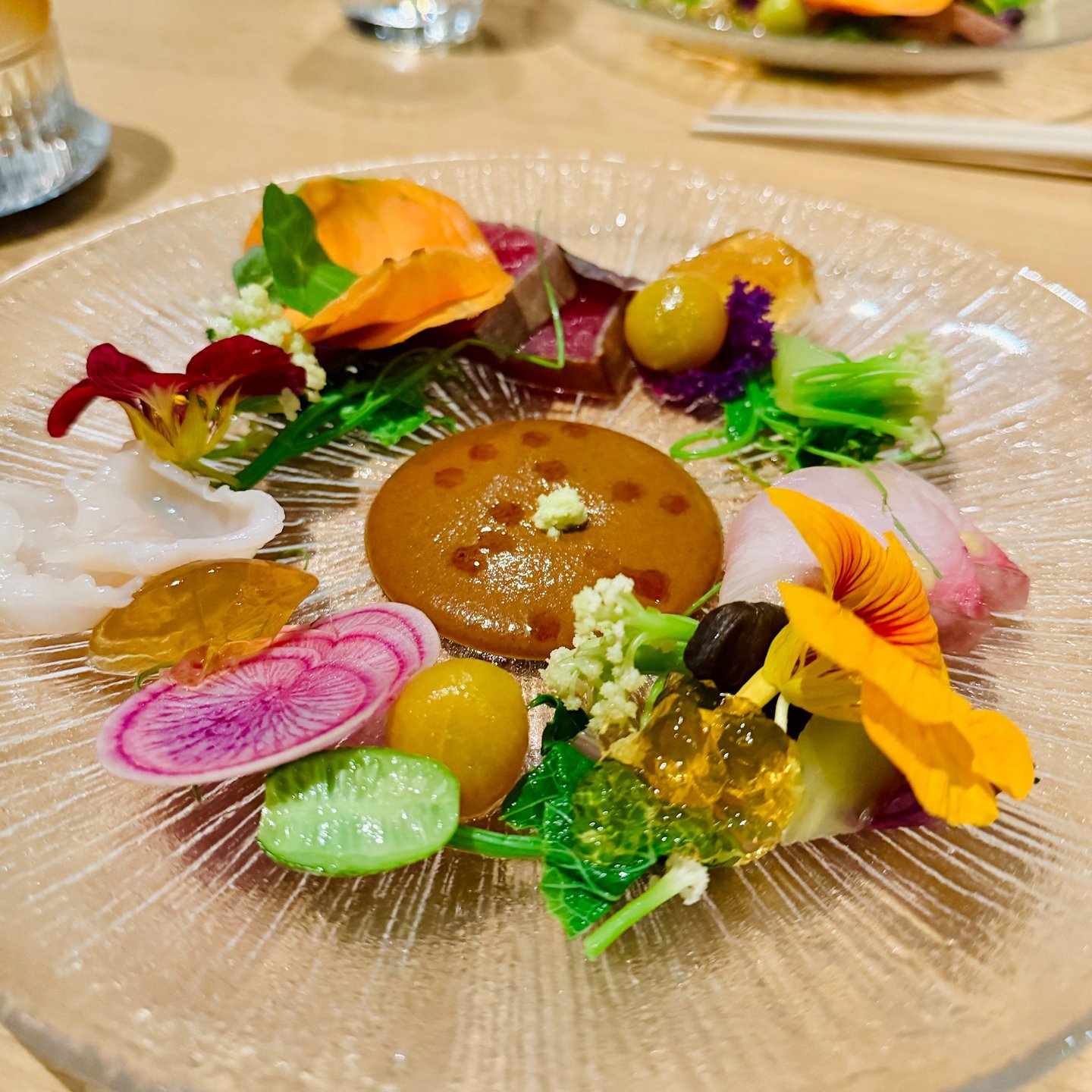
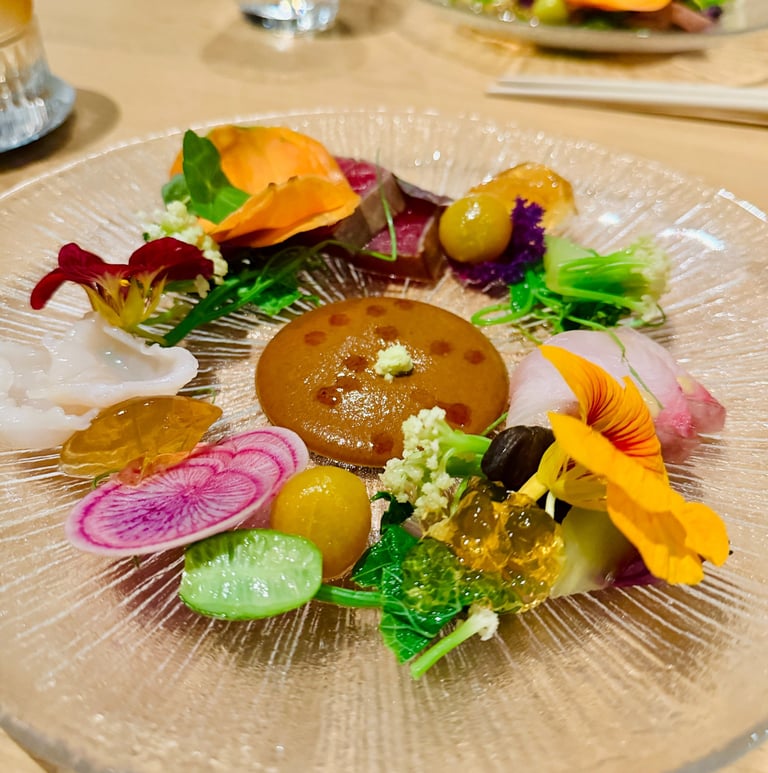
Kato's Colorful Cold Dishes "liángcài" (Photo by Junko Y.)
James Beard Award–winning Chef Jon Yao translates the vocabulary of Taiwanese home cooking into a contemporary Michelin context—one that honors memory while asserting a distinctly personal vision. Familiar dishes are not simply elevated; they are reimagined through precise technique, considered layering, and exceptional ingredients. For Taiwanese diners, the experience can be visceral. One of my guests, a Taiwanese American, reacted to nearly every course with astonishment—recognizing childhood flavors yet compelled to name their original, traditional counterparts. This tension between nostalgia and reinvention lies at the heart of Kato’s identity.
The Main Savory Sequence
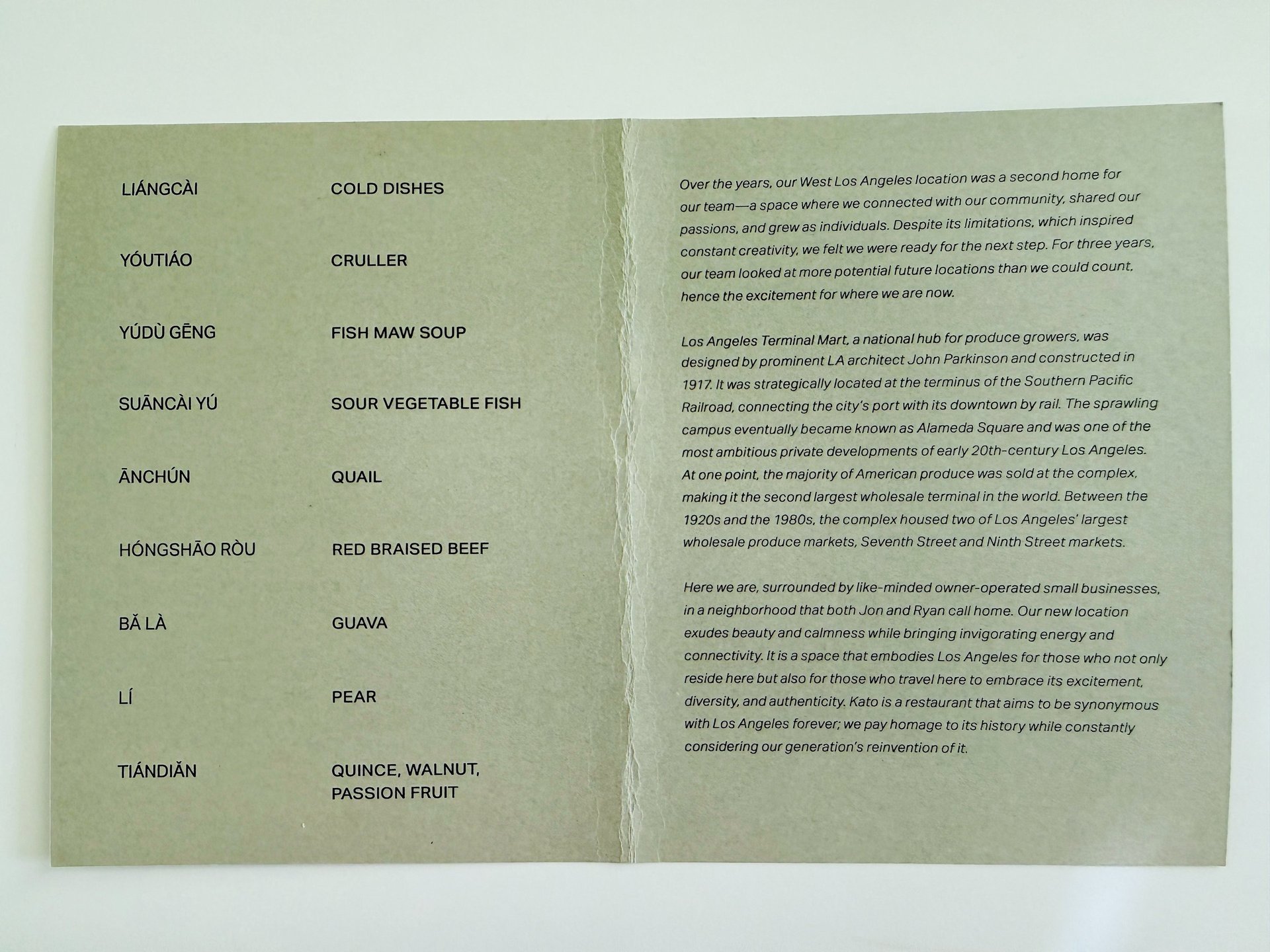
The opening liángcài, visually vibrant, arrived as a carefully orchestrated cold course: bluefin tuna, amberjack (kanpachi), lightly alcohol-marinated geoduck, grilled carrots, cauliflower, kale, and edible flowers arranged around a roasted sesame dressing accented with wasabi. The sauce delivered bold depth—garlicky, nutty, and quietly spicy—while the vegetables retained remarkable freshness and crunch, creating a lively interplay of textures. Tomato gel introduced a gentle acidity, while the pronounced smokiness of the tuna fused seamlessly with the sesame base, lending the dish a refined complexity of flavor. To a Japanese palate, the sauce read slightly assertive for an opening course, encouraging restraint in portioning rather than abundance. Even so, it made a confident and intriguing first impression.
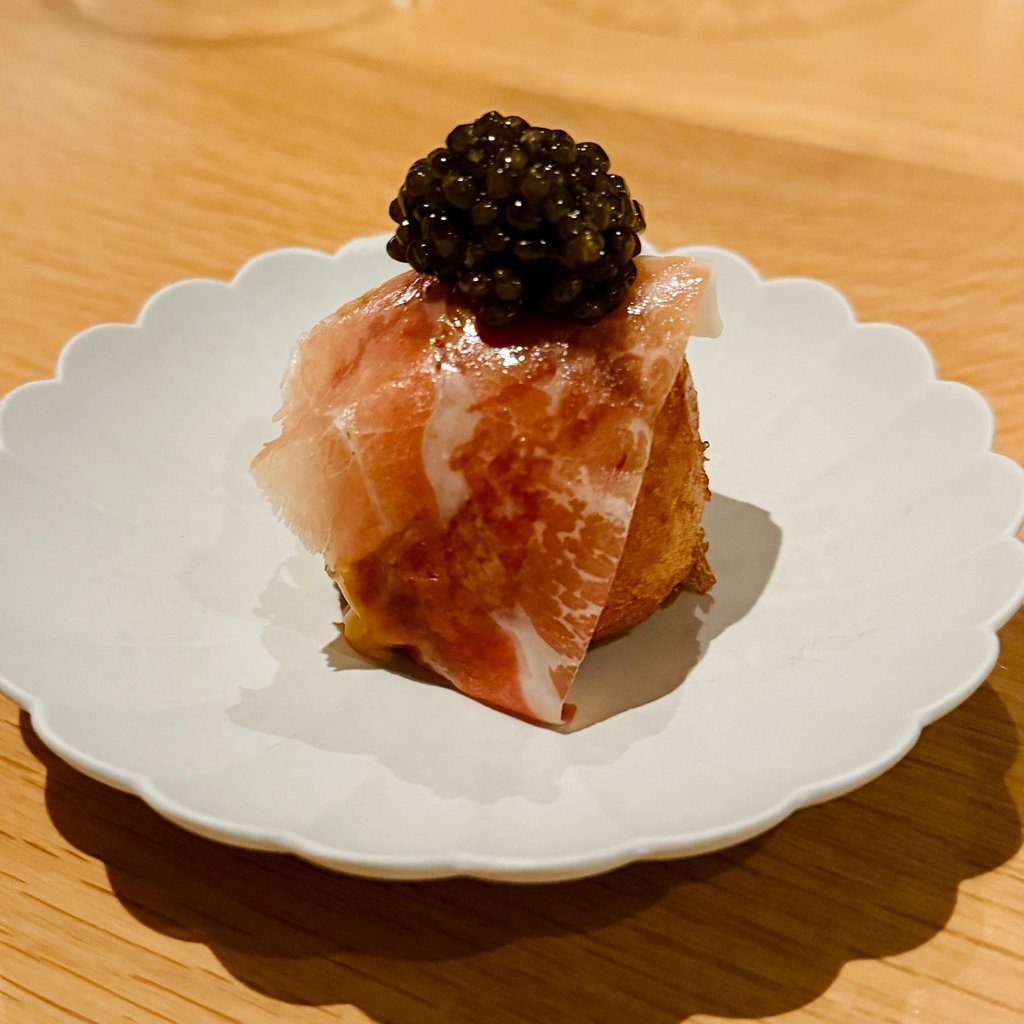
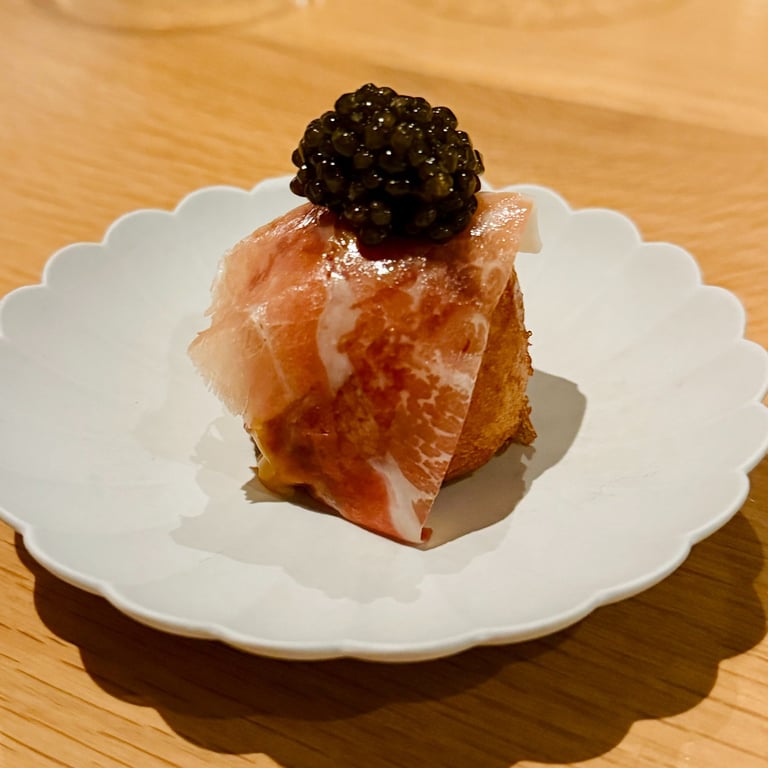
The subsequent yóutiáo was a masterclass in temperature and contrast. The crisp, warm cruller encased a fresh, creamy filling of sea urchin and brown butter, enriched with Jinhua-style ham and crowned with Kaluga caviar. The interplay was exquisite: oceanic coolness from the caviar contrasted with the richness within, all anchored by the structural familiarity of the dough. Notably restrained in salinity, the widely revered Jinhua ham contributed a mild, elegant savoriness, its fat harmonizing effortlessly with the uni’s creaminess and refined amami. The flavor of the dough itself was notably heart-warming. Having experienced freshly fried yóutiáo for breakfast in Taiwan, this reinterpretation alone would justify a return visit.
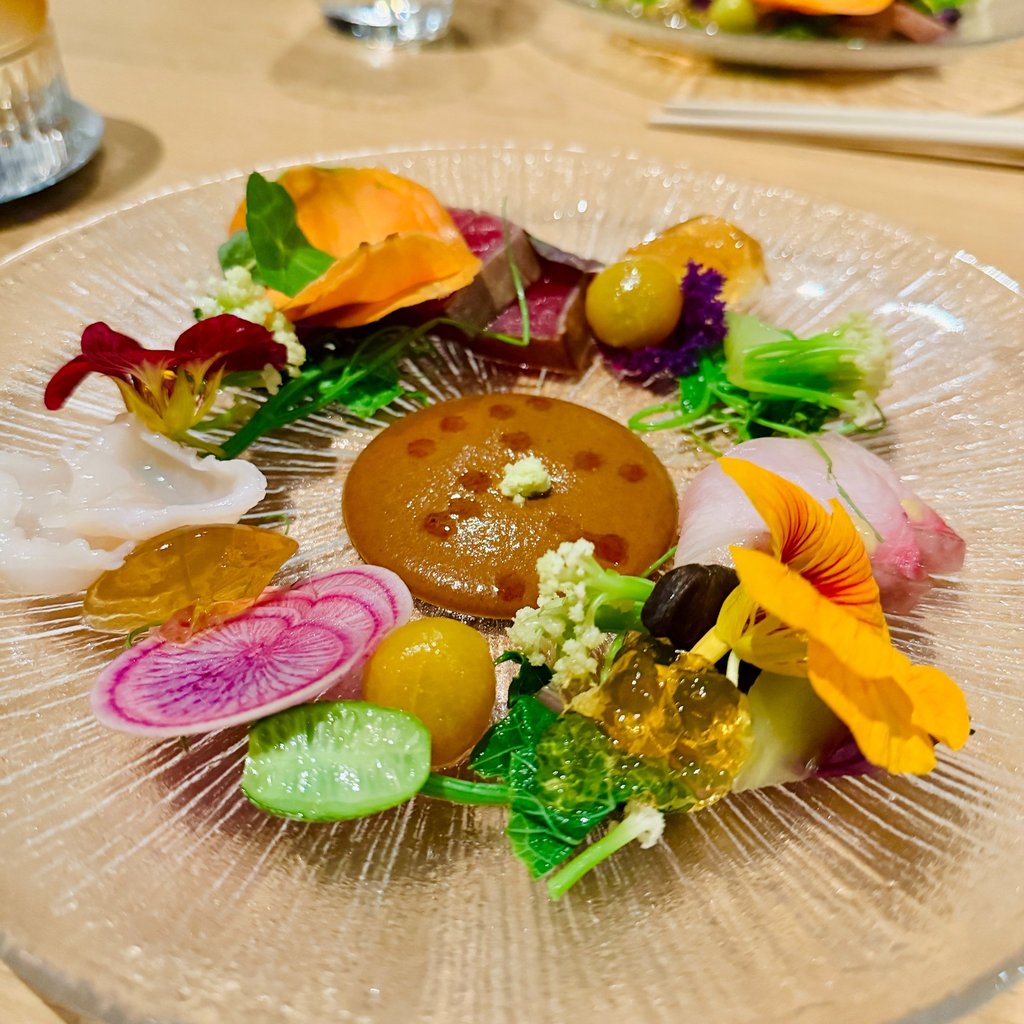
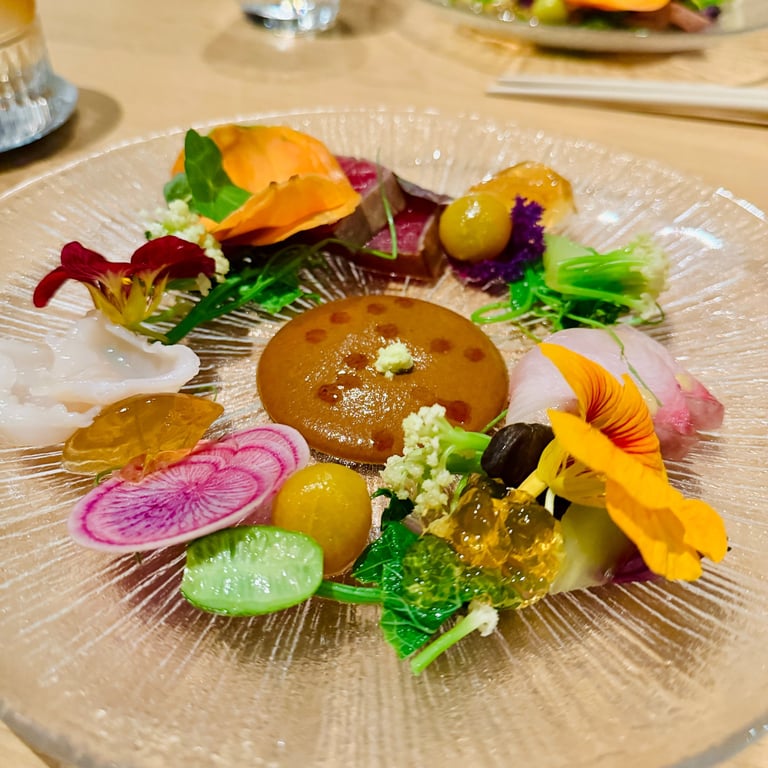
"liángcài" Cold Dishes (Photo by Junko Y.)
"yóutiáo" Cruller (Photo by Junko Y.)
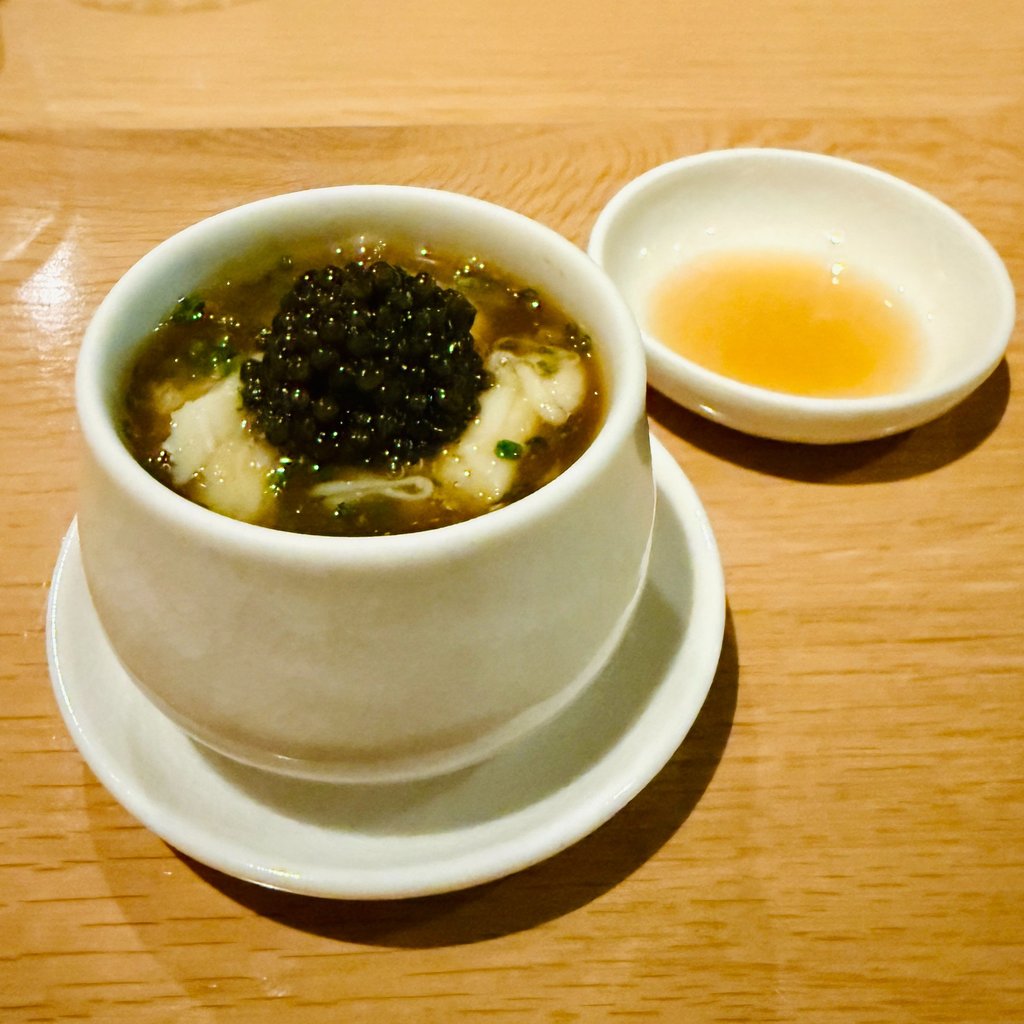
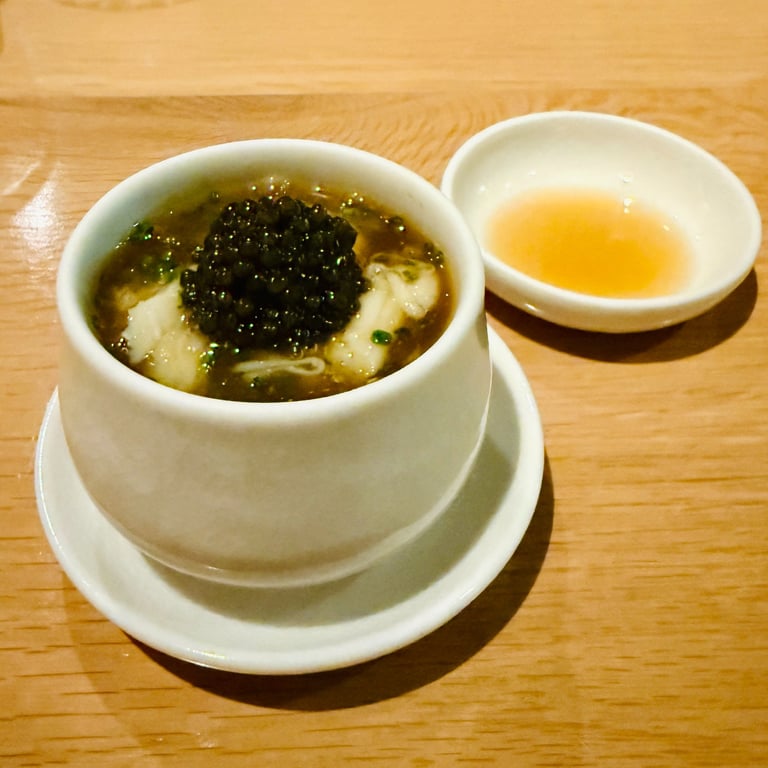
"yúdù gēng" Fish Maw Soup (Photo by Junko Y.)
The third course, fish maw soup, yúdù gēng, arrived as a crab-fat custard evocative of chawan-mushi, with fish, Dungeness crab, and Kaluga caviar, accompanied by a vinegar distilled from Dungeness crab shells. Before the first bite, the air was already perfumed with sweet crab. The dish was deeply rich in dashi, buoyed by a subtle ginger warmth, with a welcome hint of smokiness. The crab was impeccably prepared—silken and generous—while the caviar amplified both salinity and depth. The accompanying vinegar—Chinese red vinegar infused with kelp (kombu) and roasted crab shell—was revelatory. Dashi-driven and umami-forward, it delivered complexity without aggression, avoiding the sharp sting that vinegar so often imposes. Its elegance invited layering: vinegar, broth, caviar—each addition reshaping the dish. This modularity subtly echoed the traditional Taiwanese approach to building flavor at the table. Equally thoughtful was the decision not to label the dish as chawan-mushi—a gesture of respect that preserves the integrity of both Japanese culinary tradition and Chef Yao’s distinctly Taiwanese expression.
The suāncài yú followed with an immediately expressive aromatic presence. Sablefish, grilled over white birch in the hearth, was set in a soured vegetable broth built from fermented napa cabbage, its depth further intensified by sablefish bones smoked within. Daikon and eggplant completed the composition. The dish leaned confidently into sourness and smoke, an assertive profile that lingered on the palate. The fish itself was undeniably delicious—moist, flavorful, and carrying a clean, oceanic sweetness—while wakame-like marine notes and the bright accent of kinome leaves added refinement and lift. Texturally, the sablefish skin retained more resilience than expected, subtly shifting the rhythm of the dish. Overall, the course read as thoughtful and nuanced, one that encourages revisiting and deeper familiarity—particularly when considered alongside its traditional expression in Taiwan—before forming a definitive conclusion.
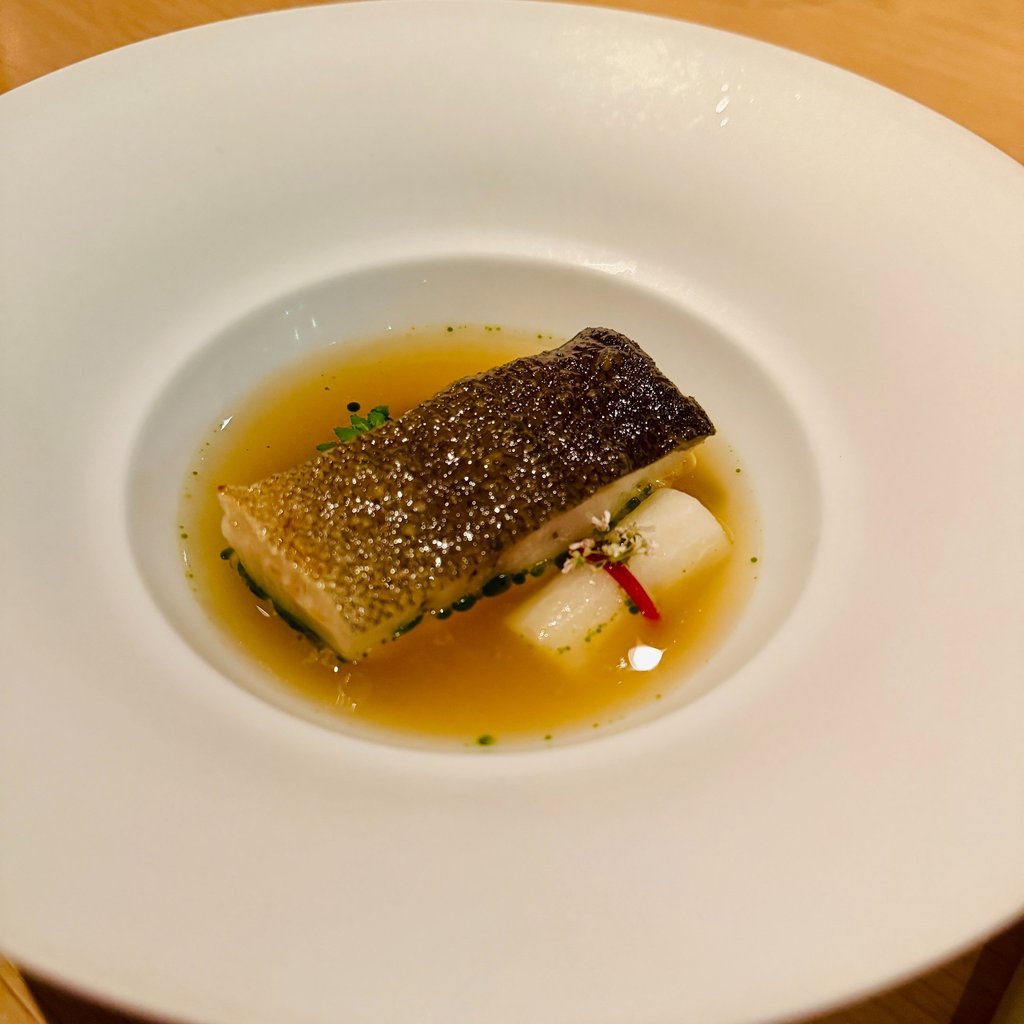
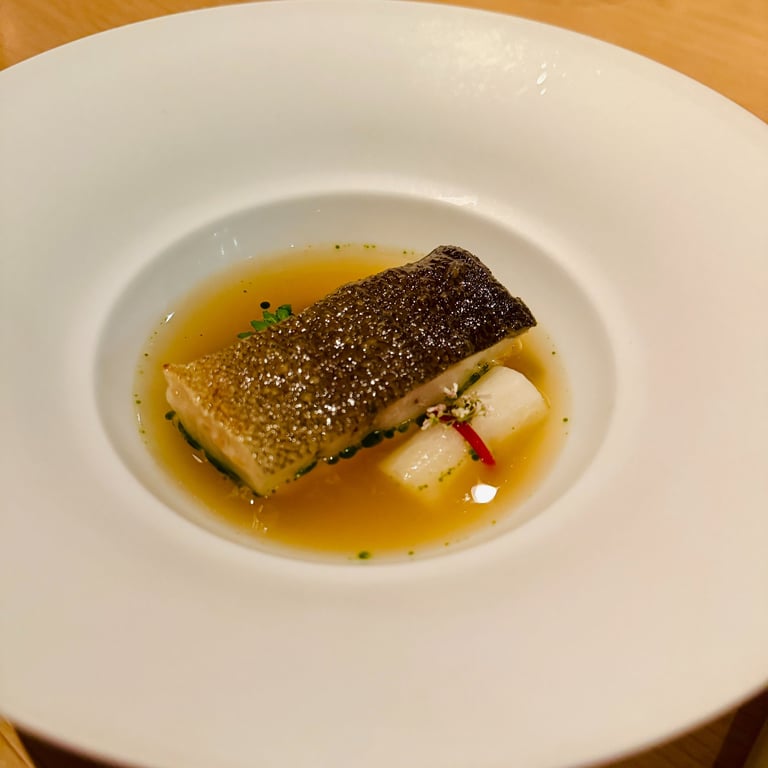
"suāncài yú " Sour Vegetable Fish (Photo by Junko Y.)
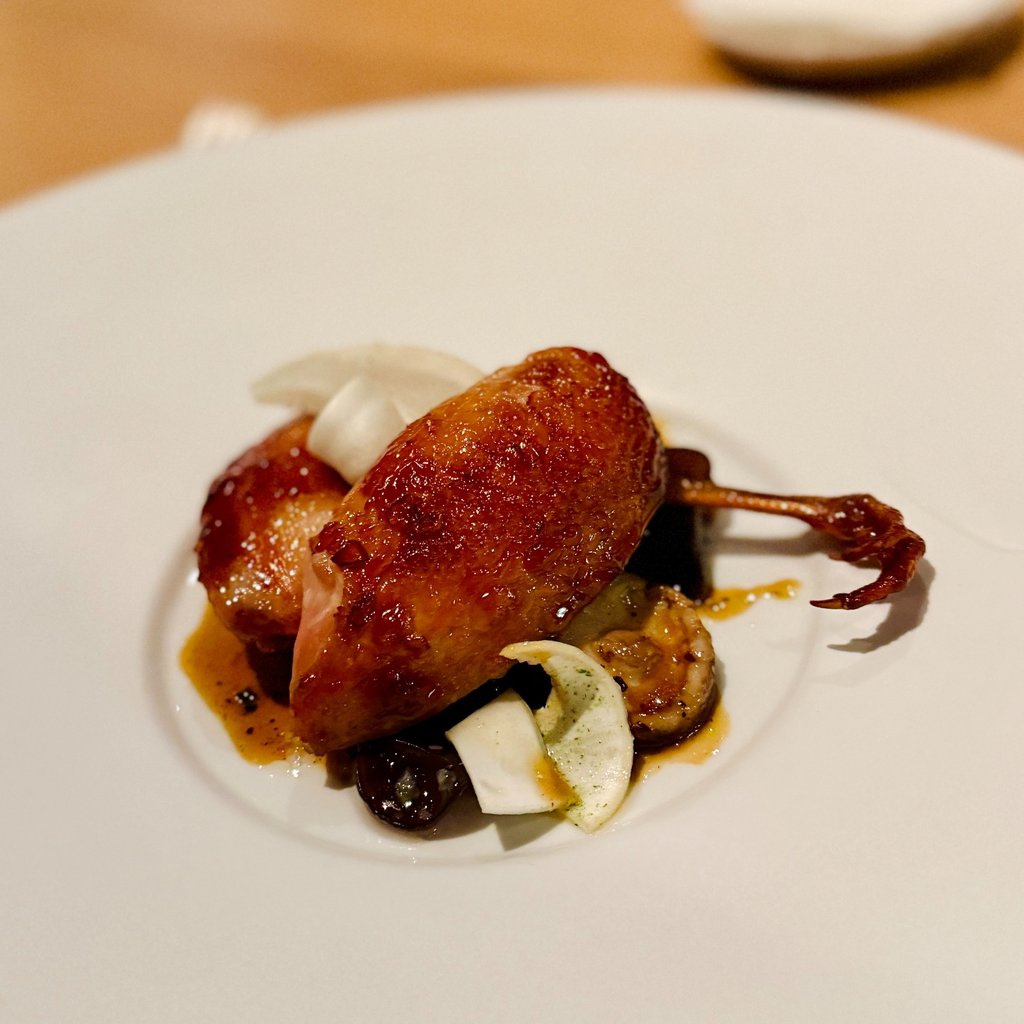
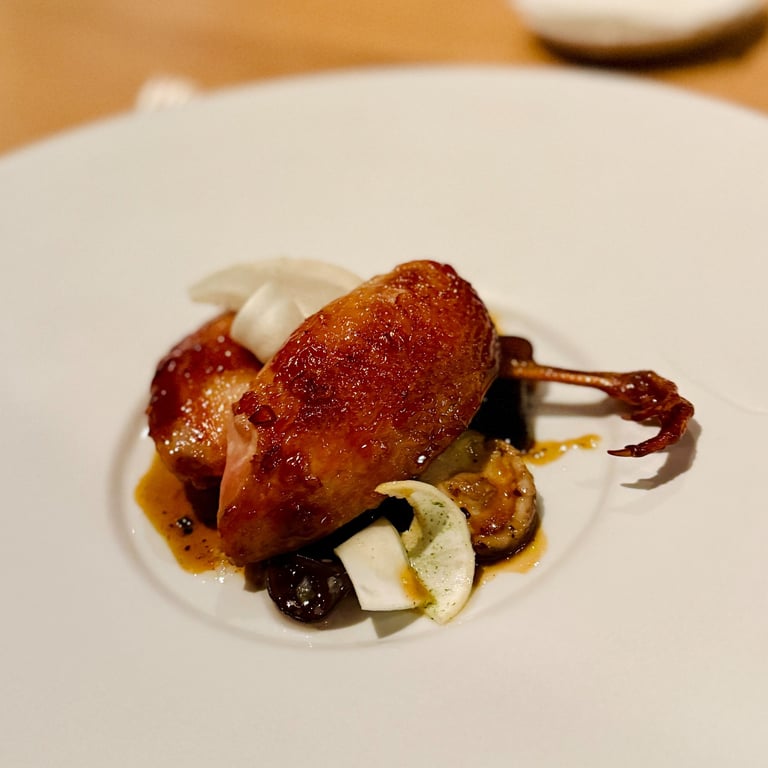
"ānchún" Quail (Photo by Junko Y.)
"hóngshāo ròu" Red Braised Beef (Photo by Junko Y.)
The ānchún course marked a decisive shift in confidence and clarity. Sourced from Wolfe Ranch in Vacaville, Northern California, the quail reflects the work of Brent Wolfe—one of the country’s most respected poultry farmers, whose decade-long collaboration with Thomas Keller has made his birds highly sought after by a small circle of serious kitchens, Kato among them. Here, the quail was treated with the rigor typically reserved for Peking duck: dry-aged for several days, bathed in maltose, sugar-brined, lacquered, smoked, caramelized, and finally roasted. The breast was served alongside sticky rice cooked with an array of mushrooms—pine mushrooms (matsutake), white mushrooms, wood ear mushrooms, and shiitake—seasoned with ginger and leeks. The quail’s leg appeared as a separate, composed element. A sauce built on magao, the Taiwanese mountain pepper prized not for heat, but for its lifted citrus perfume and subtle plant-like aromatics, completed the composition.
The result was exemplary. The quail was exceptionally tender and precisely cooked, its richness balanced by the deeply seasoned rice. Each bite unfolded with layered savoriness—familiar yet distinct—demonstrating both technical mastery and cultural fluency. It was a dish that satisfied not through excess, but through control, leaving the guest quietly and fully convinced.
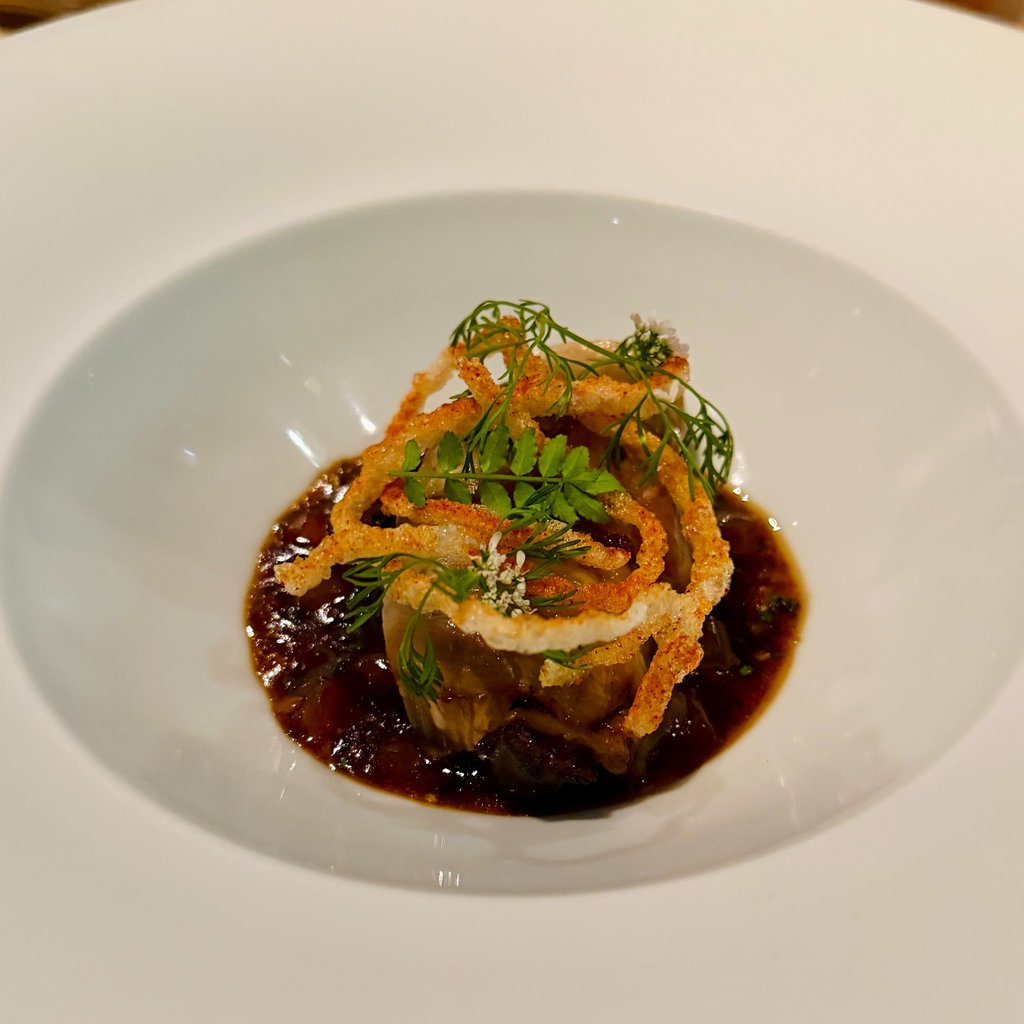
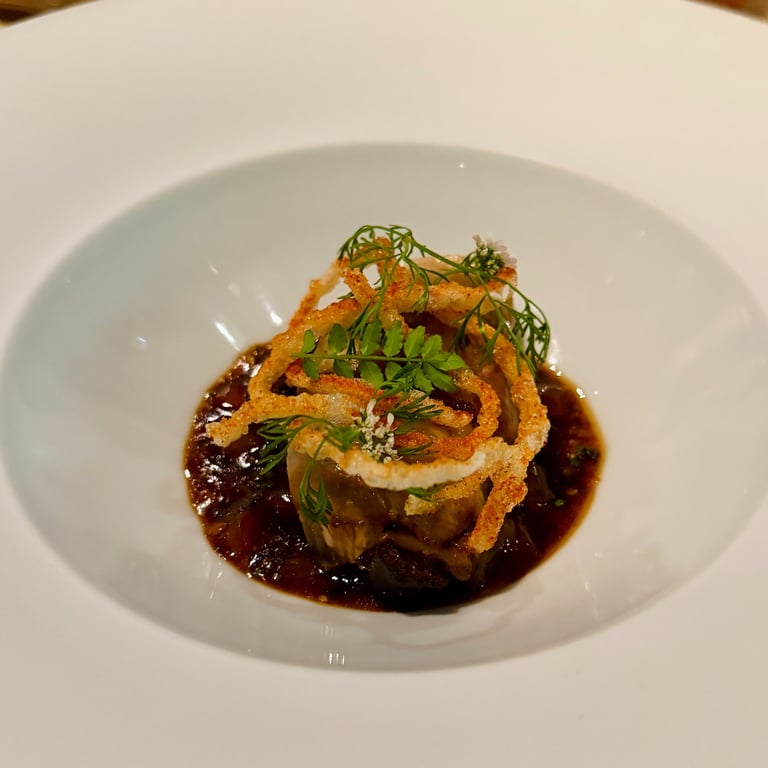
The concluding savory course paired bread service with hóngshāo ròu, presented here as an American A5 Wagyu interpretation. The beef rested in a richly constructed ragù derived from beef tendon, with crisped tendon layered on top to introduce contrast in texture. Alongside, warm bread was served with aromatic oil and honey—an astute counterpoint that softened and rounded the wagyu’s bold, spice-driven profile.
The dish leaned assertively into spice with doubanjiang. For a palate shaped by Japanese cuisine, the heat verged on numbing, momentarily obscuring some of the dish’s deeper nuances. Yet the underlying construction was admirable: spices integrated with the natural sweetness and depth of the beef rather than masking it with salinity. The absence of aggressive salt allowed the Wagyu’s inherent richness to remain the focal point. Textural elements—most notably an airy, senbei-like crunch of the crisped tendon—added a playful and effective dimension, while the beef itself was meltingly tender.
Aromatically, the spice profile was transportive, recalling my first encounter with Taiwanese street-side noodle stalls—an olfactory memory that remains distinct precisely because such spice expressions are rare in Japan. By the final bites, the cumulative richness began to register as slight fatigue rather than indulgence, and I found myself longing for greater transparency between layers—those moments when depth invites return rather than insistence. That response, however, likely reflects cultural palate calibration as much as compositional intent.
The Desserts
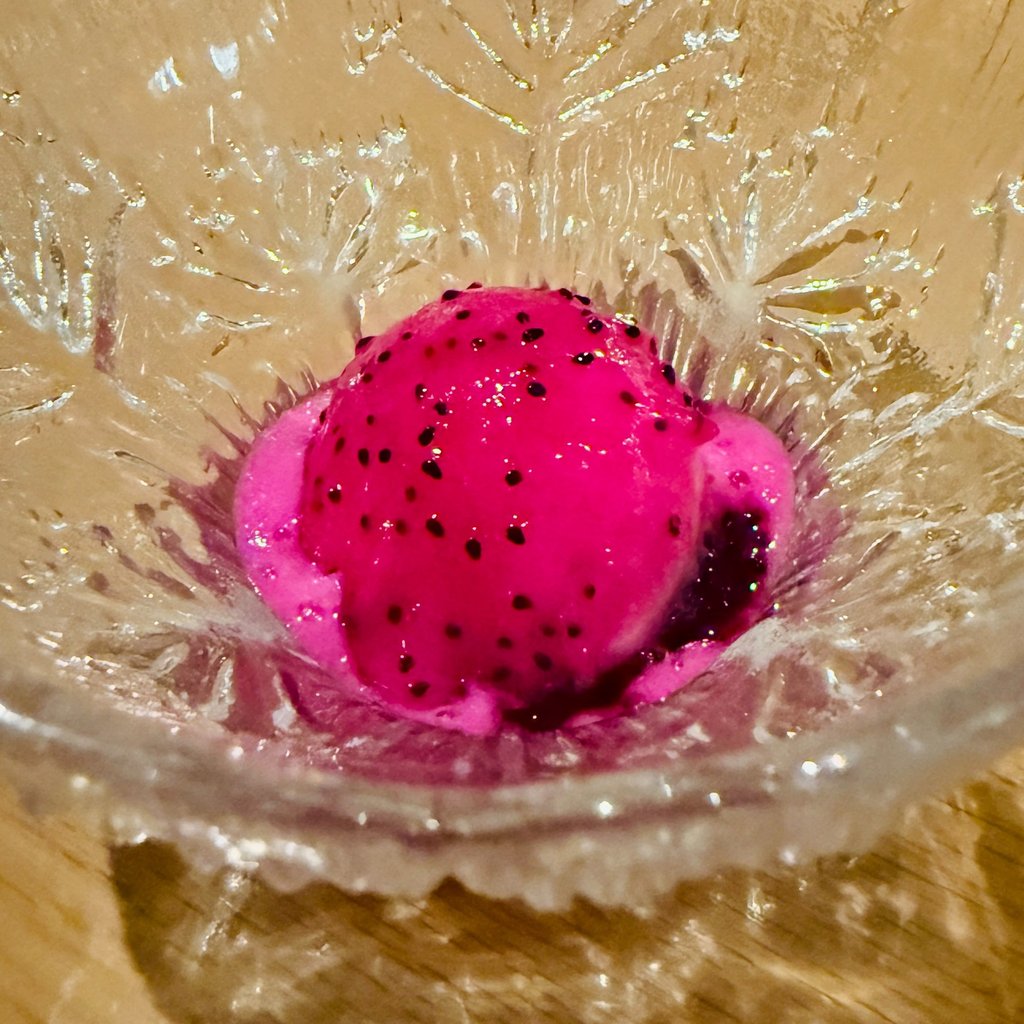
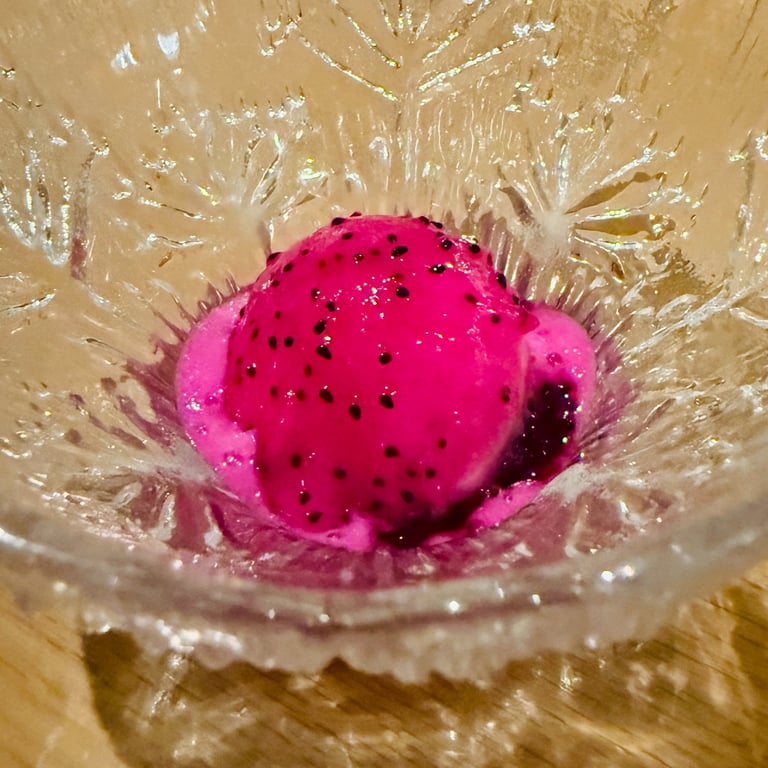
The guava dessert, bǎ là, was introduced as a refreshing interlude, composed with dragon fruit—a Taiwanese symbol of good fortune—and guava sorbet. The bowl was presented at a gentler temperature than expected for a sorbet, prompting a brief moment of curiosity before the flavors settled on the palate. A delicate layer of red dragon fruit crowned the sorbet, lending both visual vibrancy and subtle sweetness. The composition was graceful and cleansing, offering a poised transition into the concluding sweets.
The subsequent dessert, lí, centered on Monterrey pear custard, topped with a walnut sablé and framed by poached pears filled with red date (jujube) purée. At its center rested what the pastry chef refers to as a “raindrop”—Riesling grape verjus set aside before before full fermentation—finished with finely shaved early-season walnuts. This course demonstrated notable refinement and balance, emphasizing aromatic depth over overt sweetness. While Monterrey pears differ stylistically from the perfume-forward La France variety, their pairing with the verjus produced a layered fragrance reminiscent of the latter’s floral intensity. The shaved walnuts evoked the warmth and nostalgic comfort often associated with traditional Taiwanese desserts, grounding the dessert in cultural familiarity while maintaining contemporary finesse.
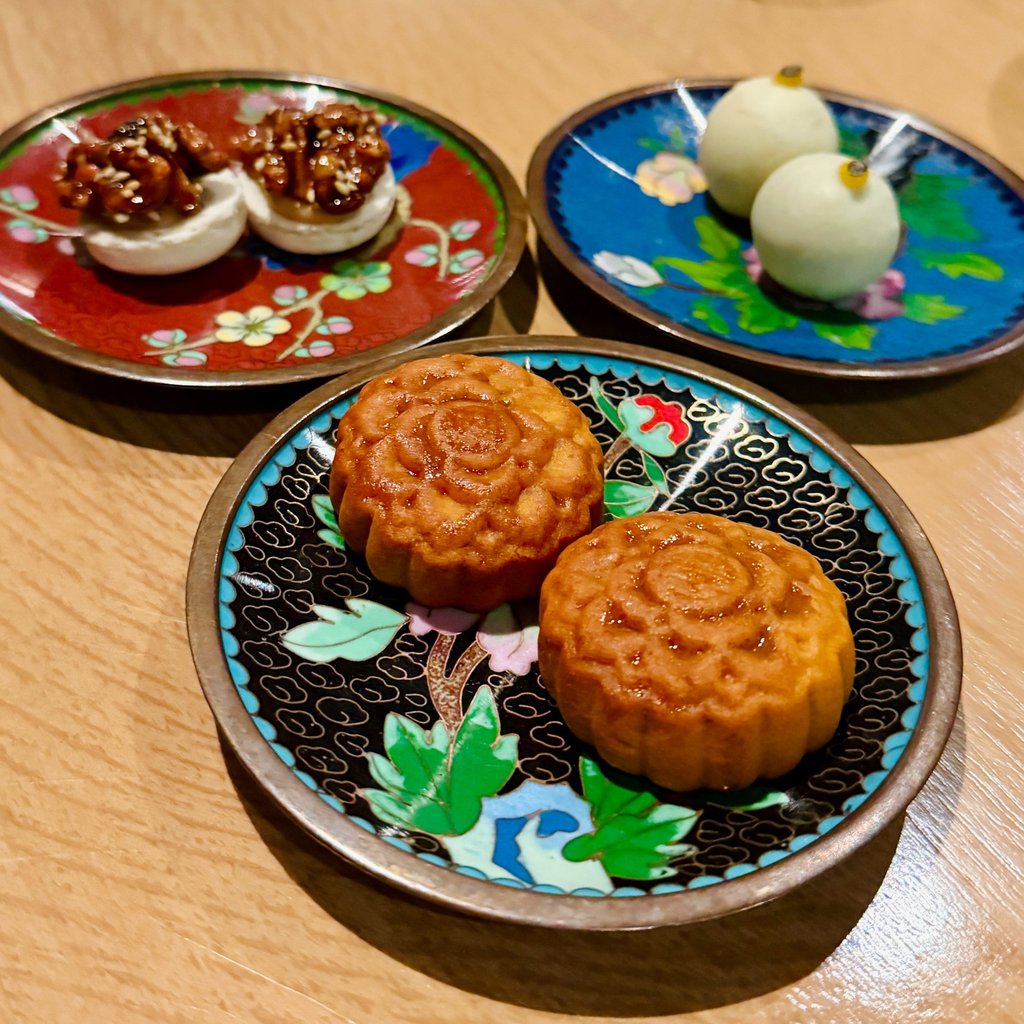
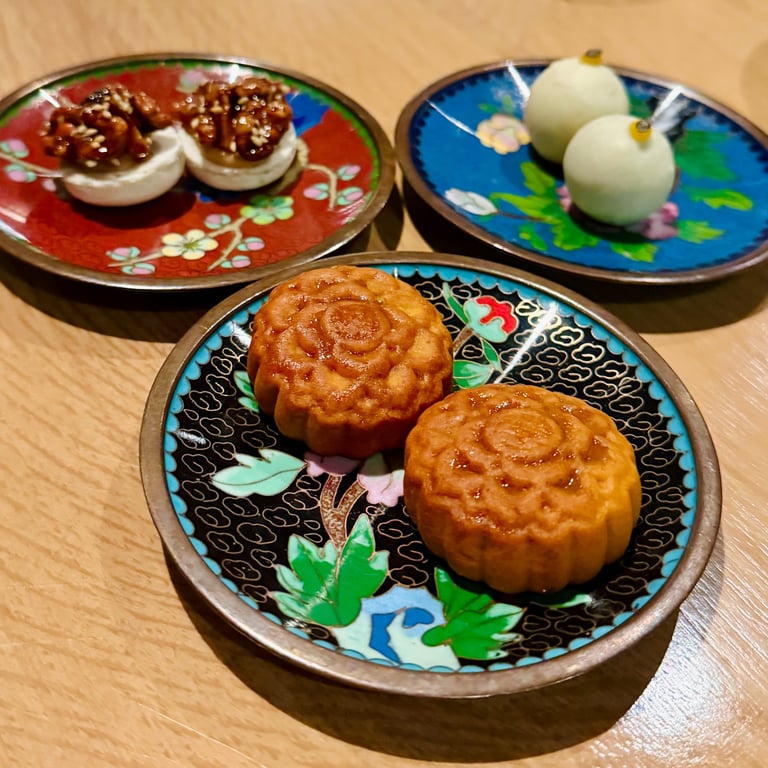
The tasting menu concluded with tiándiǎn, a selection of final bites that balanced precision with playful nostalgia. A mooncake (yuèbǐng) featured quince, and passion fruit (bǎixiāng guǒ) encased in white chocolate, alongside walnut macarons (qū qí bǐng) finished with sesame. These petit sweets offered a composed and thoughtful conclusion, leaving a polished and harmonious final impression.
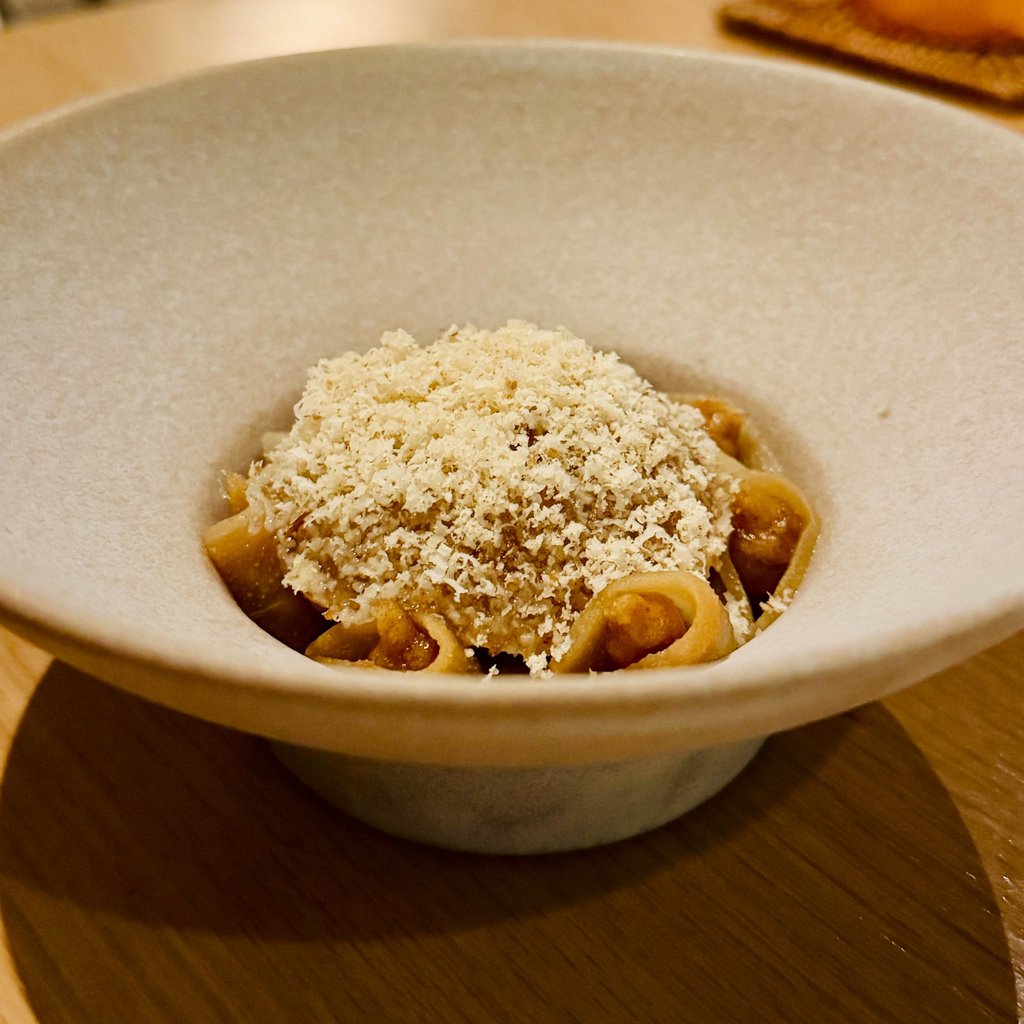
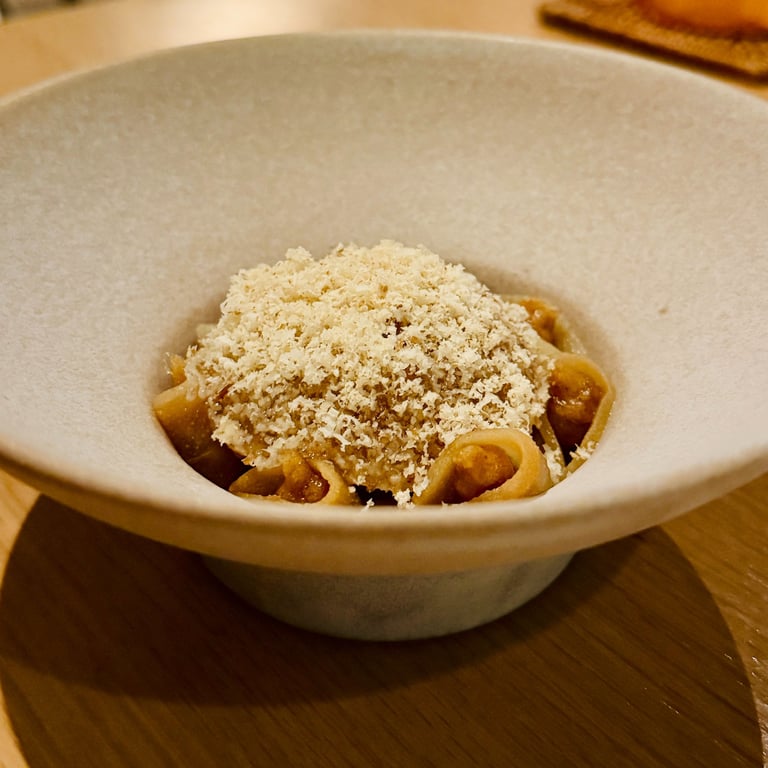
"bǎ là" Guava (Photo by Junko Y.)
"lí" Pear (Photo by Junko Y.)
" tiándiǎn" Quince, Walnut, Passion Fruit (Photo by Junko Y.)
The Menu
Visited: December 6, 2025


Related Stories